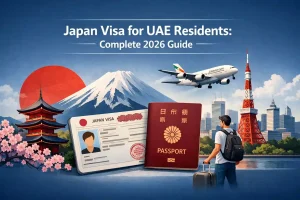
Japan welcomes UAE residents, but the visa must be arranged before travel. No visa on arrival, regardless of nationality. For Pakistani, Indian, Egyptian, or any other passport, the rule is the same. Get the visa before flying, and entry is smooth.
The process is clear and simple. A few documents. One appointment. A short wait. This guide walks through every step. Where to apply. What to bring. How to get it done right. Follow along, and the visa will be ready before the flight.
Who Actually Needs to Apply?
Most UAE residents will need to go through the visa process. The only people who do not are the following:
- Japanese citizens
- UAE nationals traveling for tourism (they can use the eVisa system)
- Nationals from countries like the United States, the United Kingdom, Canada, and a handful of European nations that already have visa exemption agreements with Japan
For everyone else holding a UAE residence permit and a passport from a country that does not have a visa waiver with Japan, the application is mandatory. There is no way around it.
Where to Apply Matters More Than Most People Realize
Japan has two diplomatic missions in the UAE. Choosing the wrong one means the application gets rejected without anyone even looking at the documents.
For those living in Dubai, Sharjah, Ajman, Umm Al Quwain, or Ras Al Khaimah:
The application goes to the Consulate of Japan in Dubai. But here is the catch: walking into the consulate is not an option.
All submissions happen through an authorized visa center, usually VFS Global. An appointment needs to be booked first, and then the documents will be handed over there.
For those living in Abu Dhabi, Al Ain, or the Western Region:
The application goes directly to the Embassy of Japan in Abu Dhabi. Appointments are booked through their online system, and submission happens in person at the embassy.
A lot of people mix this up. A quick check on the emirate of residence before doing anything else saves a huge amount of time and frustration.
Different Visas for Different Purposes
The temporary visitor visa covers most travel reasons. But within that, there are a few distinct categories.
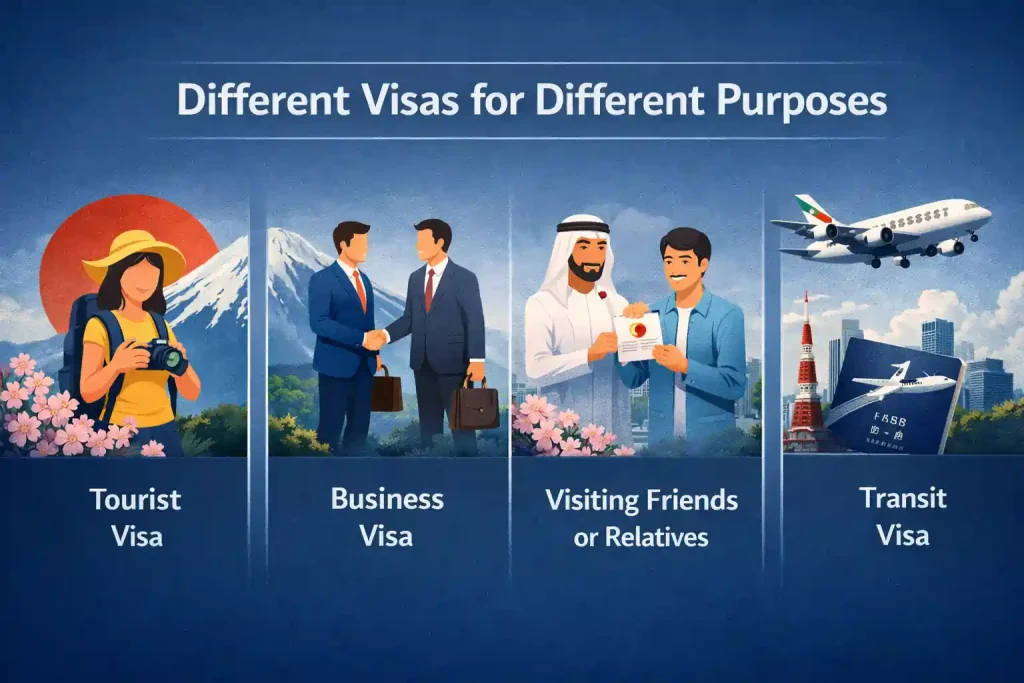
Tourist Visa
This is what most people apply for. Sightseeing, holidays, and short vacations fit in this category.
Business Visa
For anyone heading to Japan for meetings, conferences, or signing contracts. The main difference here is that an invitation letter from the Japanese company is required.
Visiting Friends or Relatives
Some travelers stay with family or friends instead of hotels. A letter of invitation from the host in Japan is needed. The host must also show proof that they legally reside there.
Transit Visa
Sometimes Japan is just a layover. Passengers passing through may need a transit visa. But some nationalities can transit without one. Checking with the embassy beforehand is the safest move.
The Document Checklist:
This is where applications either move forward smoothly or get stuck. Japanese visa officers are known for being thorough. Missing one piece of paper often means a rejection.
1) Passport and Residency Status
The passport needs to have at least two blank pages. The expiration date should be at least six months after the planned departure from Japan. The UAE residence visa, the one stamped inside the passport, must be valid for at least three months after the return date.
Photocopies are required for the passport bio page, the UAE residence visa page, and any previous Japan visas if they exist.
2) The Photograph
Japanese visa photos have their own rules. The size is 4.5 cm by 4.5 cm, slightly square, unlike the standard passport photos used in many other countries. The background must be white with no shadows.
The photo should be taken within the last six months. The expression should be neutral, mouth closed, and ears visible. Staples are not allowed; the photo needs to be glued to the application form.
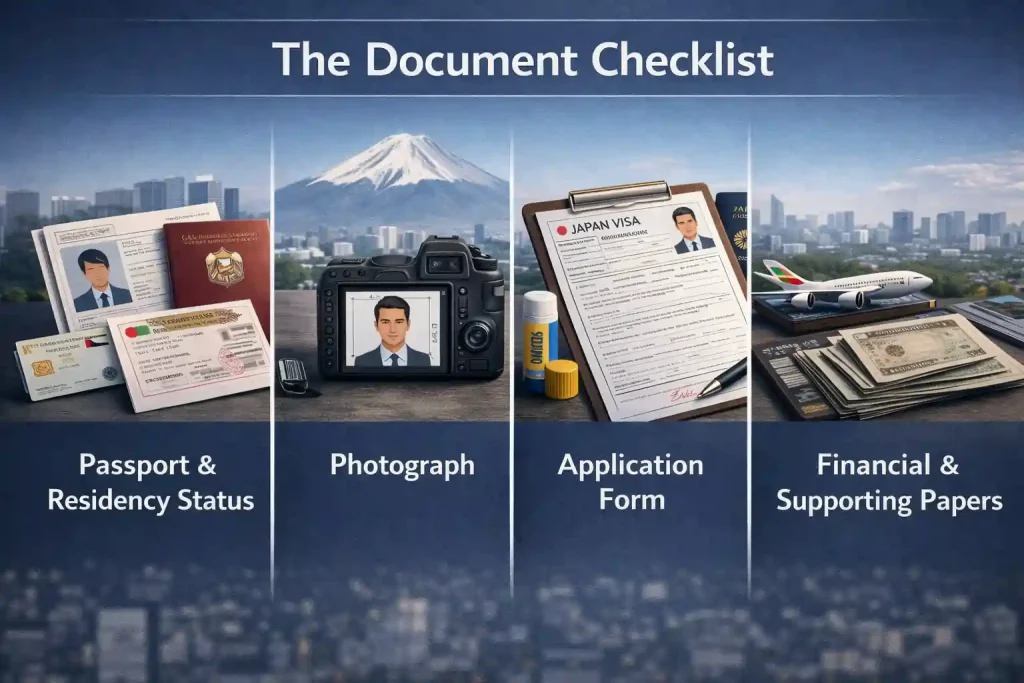
3) The Application Form
Every single field on the application form needs to be filled out. If something does not apply, “N/A” should be written in that space. Leaving blanks creates problems.
Common slip-ups include forgetting to sign at the end, writing passport numbers incorrectly, or listing travel dates that do not match the flight reservation. These small mistakes cause unnecessary delays.
4) Financial Documents
The visa officer needs to see that the trip can be afforded and that there is a good reason to return to the UAE afterward.
Bank statements from the last three to six months are required. The bank stamp matters; online printouts without a stamp or QR code often get questioned. A steady balance with regular salary deposits looks better than a sudden spike right before applying.
There is no official minimum balance, but a comfortable guideline is between AED 10,000 and AED 20,000, depending on how long the trip is. A salary certificate from the employer on company letterhead helps too. It should state the job title, monthly salary, and how long the person has been employed.
For business owners, the trade license and company bank statements are needed instead of a salary certificate.
5) Travel Plans and Accommodation
A round-trip flight reservation is required. Buying the actual tickets before visa approval is risky. A reservation from an airline or travel agency is enough for the application.
Hotels need to be booked for the entire stay. The reservation dates should match the flight dates exactly. If staying with friends or relatives instead of hotels, a letter of invitation from the host in Japan is required. The host also needs to provide proof of their residency status in Japan.
6) Employment and Other Supporting Papers
A no-objection certificate from the employer is required for employed applicants. It needs to be on official company letterhead, addressed to the embassy or consulate, and clearly state that leave has been approved and the employee will return to work afterward.
If someone else, such as a spouse or parent, is paying for the trip, proof of relationship is needed. That means an attested marriage certificate or birth certificate, along with the sponsor’s bank statements and a signed sponsorship letter.
Any previous visas to countries like the United States, the United Kingdom, or Schengen nations should be photocopied and included. It shows a history of following visa rules.
For those who have recently obtained UAE residency, understanding the UAE medical fitness test requirements for residency ensures all local documentation is in order before international travel.
How the Application Actually Works
For Dubai and the Northern Emirates
An appointment needs to be booked through VFS Global. These slots fill up quickly, especially during peak travel seasons.
On the appointment day, all original documents and photocopies are submitted. Biometrics, fingerprints are taken at the center. The visa fee is paid at that time. It is non-refundable even if the visa gets rejected.
Processing usually takes five to seven working days. During busy periods, cherry blossom season in spring or autumn colors in October and November. It can stretch a bit longer.
For Abu Dhabi and Al Ain
An appointment is booked through the embassy’s online system. Submission happens in person at the embassy during designated hours. The fee is paid, and then it is a waiting game. Processing times are similar to the Dubai side.
Tracking the Application
Japan does not have a public online tracking system like the UAE’s visa status portals.
For applications submitted through VFS Global in Dubai, tracking is available on the VFS website using the reference number given at submission.
For applications submitted directly at the embassy in Abu Dhabi, applicants are contacted by phone or email when the passport is ready for collection. Calling or emailing before five to seven working days have passed does not speed things up.
Why Applications Get Rejected
Certain reasons come up again and again. Knowing them helps avoid the same mistakes.
1) Incomplete forms.
Missing signatures, blank fields, or information that does not match the passport.
2) Bank balance issue.
Not necessarily low balances, but inconsistent ones. A sudden large deposit right before applying raises questions.
3) Unclear travel plans.
Vague itineraries or hotel bookings that do not cover the full stay.
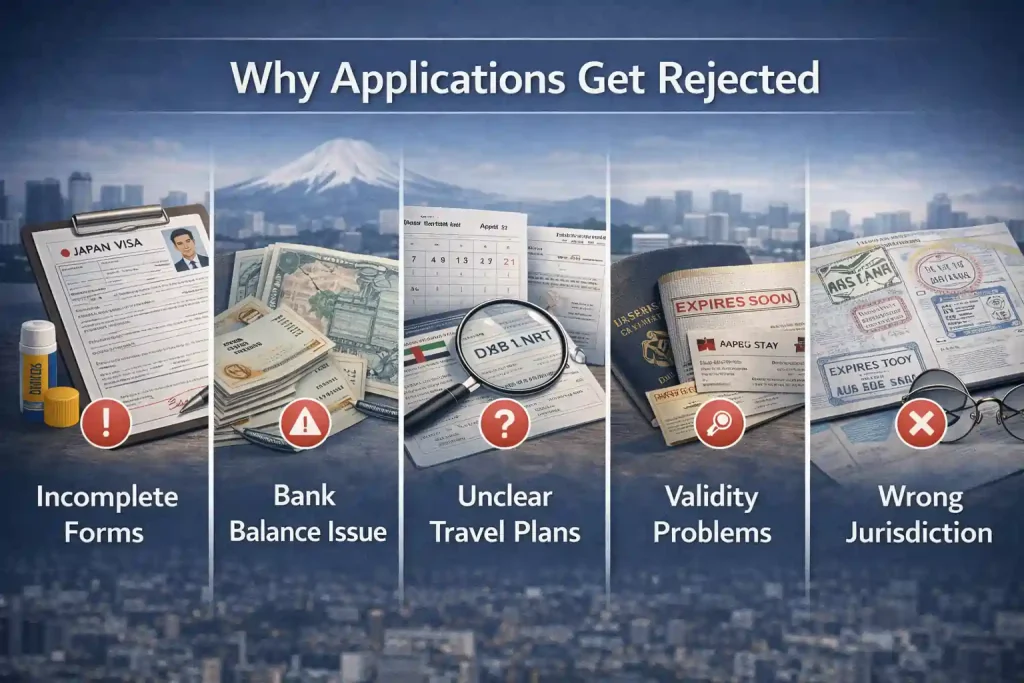
4) Passport or visa validity problems:
If the passport expires soon or the UAE residence visa expires within three months of the return date, the application will not be approved.
5) Prior overstays anywhere in the world.
Hiding them does not work; immigration records are shared.
6) Applying in the wrong jurisdiction.
A Dubai resident applying in Abu Dhabi gets rejected without review.
Tips for a Smoother Process
- Apply early. Three to four weeks before travel is a safe window. Peak seasons see delays, so giving extra time helps.
- Make everything match. Flight dates, hotel bookings, leave approvals, and the application form should all show the same information. Any mismatch looks suspicious.
- Keep documents organized. A clean, logical order, passport, form, photo, financials, and travel details make it easier for the officer reviewing the file.
- Be honest. False information gets flagged immediately. A rejection for dishonesty can affect future applications to Japan and other countries.
- Ask for help if needed. For freelancers, people who recently moved to the UAE, or those with previous rejections, a travel agency that specializes in Japan visas can review the file before submission. It costs a bit more but saves the headache of a rejection.
Visa Validity and Length of Stay
Most tourist visas for UAE residents come as a single entry. The allowed stay is usually 15 or 30 days, matching what was submitted in the itinerary. The visa needs to be used within three months of the date it is issued.
Extensions are rarely granted in Japan. If more time is needed, it should be requested during the application.
Frequently Asked Questions
Can the visa be applied for online?
No. Submission must happen in person at the designated visa center or embassy. The eVisa option is not available for UAE residence visa holders.
Is travel insurance required?
Not for the application, but it is strongly recommended. Medical costs in Japan can be high, and having coverage protects against unexpected expenses.
What happens after a rejection?
The applicant can reapply after addressing the reason for rejection. The visa fee is not refunded. There is no appeal process.
Can family members apply together?
Each family member needs a separate application form and their own set of documents. But they can be submitted together in one package.
Will an interview be required?
Not always. But consular officers can request an interview if they need clarification on anything in the application.
Can I apply for a Japan visa and an Umrah visa at the same time?
Yes, both visas can be pursued separately. For those planning religious travel, applying for an Umrah visa from the UAE follows a different process through the Nusuk platform.
Conclusion
Getting a Japan visa from the UAE comes down to preparation. The documents are standard. The process is clear. The wait is short for most applicants. Stick to the requirements, double-check every detail, and submit through the right channel. Approval follows.
Once the visa is in hand, the real planning begins. Flights. Hotels. Itineraries. The first bowl of ramen. That first view of Mount Fuji from the train window. Japan rewards those who prepare. Start early, follow the steps, and the journey will be smooth from the moment the plane takes off.