
ICA approval is not needed for most UAE residents returning home. That rule ended in late 2022. Travelers with valid residency visas, clean records, and absences under six months can board their flights without any pre-approval.
The exceptions are clear: those away for more than six months, people with expired or cancelled visas, new visa holders still overseas, and anyone carrying unpaid fines or active bans must secure approval before travel.
Dubai residents use GDRFA instead of ICA. The entire process, checking status or applying for approval, takes minutes online and costs nothing unless fines need clearing.
What Changed and Why It Matters
Before 2022, every residency visa holder had to apply for ICA approval before flying back to the UAE. It was a mandatory step. People sat at their computers, entered passport numbers, waited for confirmation, and printed out the approval slip. Airlines would not let anyone board without seeing it.
That changed in late 2022. The UAE government removed the requirement for most travelers. The thinking was straightforward: if a residency visa is valid and the file is in order, why make people go through an extra step? So the system shifted to an exception-based model. Now, only specific cases require approval. Everyone else just travels normally.
But old habits die hard. Some airlines still ask for approval out of caution. Travel agents still get calls from confused passengers. And people who have not traveled in a while remember the old process and assume it still applies. Understanding what actually matters today clears up the confusion.
Who Absolutely Needs ICA Approval
The rule change covers most people. But a few categories remain where approval is non-negotiable.
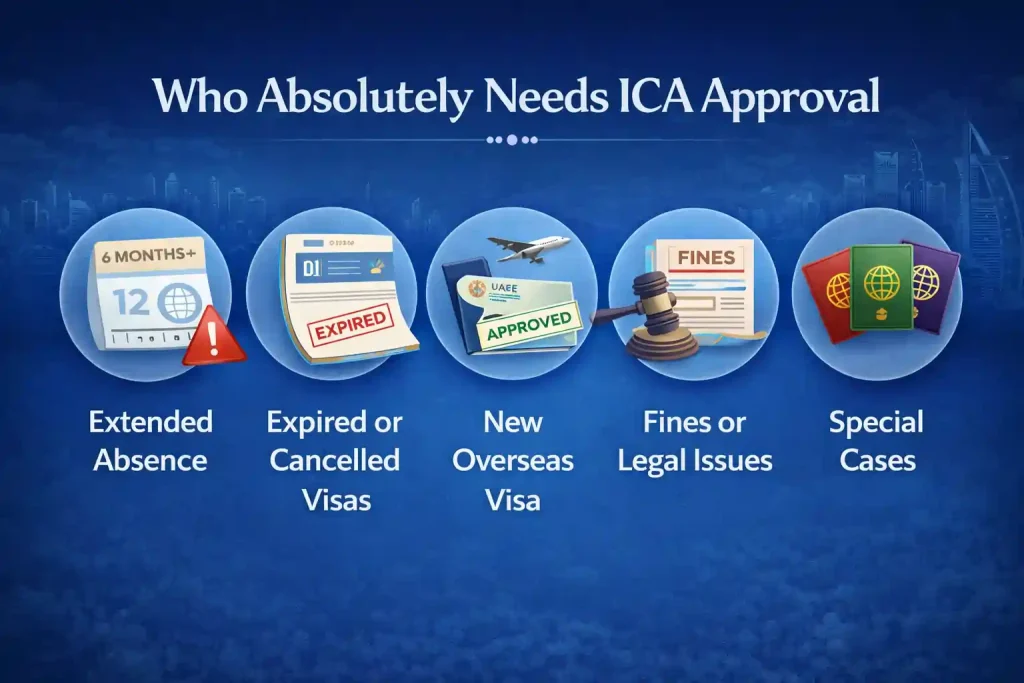
- An extended absence beyond six months:
Residency visas have a built-in rule. If the holder stays outside the UAE for more than six consecutive months, the visa becomes invalid.
It does not get cancelled automatically, but entry is blocked until approval is obtained. The ICA system allows residents in this situation to apply for permission to return. Approval is not guaranteed; it depends on the circumstances, but without it, boarding a flight is not possible.
- Expired or cancelled visas:
Sometimes a residency visa expires while the holder is abroad. Other times, the sponsor cancels the visa before the person returns. In both cases, the residency status is no longer active.
Getting back into the UAE requires approval through ICA. The process involves submitting the passport details and waiting for clearance.
- New visas issued while the holder is overseas:
A person can receive a new employment visa or family sponsorship visa while still outside the UAE. The visa might be stamped in the passport, but the immigration system may not have fully activated it.
ICA approval confirms that the visa is ready for use. Travelers in this situation should secure approval before booking flights.
- Outstanding fines or legal issues:
Unpaid traffic fines, bounced checks, court cases, or active immigration bans will block entry. The ICA system pulls up any issues attached to the residency file. Travelers can see exactly what fines exist and pay them through the portal. Once cleared, approval comes through.
If legal issues are more serious, a visit to an immigration office may be required.
- Certain nationalities and special cases:
For travelers from specific countries or those with complex travel histories, the system may still flag them for additional verification. In these cases, approval becomes mandatory. The only way to know is to run a status check through the ICA or GDRFA portal.
For those from countries facing current visa considerations for different nationalities, additional verification steps may apply.
ICA Versus GDRFA:
The UAE runs two separate immigration systems. This confuses many travelers.
ICA handles Abu Dhabi, Sharjah, Ajman, Umm Al Quwain, Ras Al Khaimah, and Fujairah. Any residency visa issued in these emirates falls under the jurisdiction of the ICA.
GDRFA handles Dubai. Anyone with a Dubai-issued visa deals exclusively with GDRFA.
The two systems do not share data seamlessly. Checking the wrong portal returns no results or incorrect information. Knowing which authority issued the residency visa determines where to go.
A quick look at the residency visa sticker shows the issuing emirate. If it says Dubai, use GDRFA. If it says any other emirate, use ICA.
How to Check Status or Apply for Approval
The process is the same whether checking status or applying for approval. It takes a few minutes and requires only basic documents.
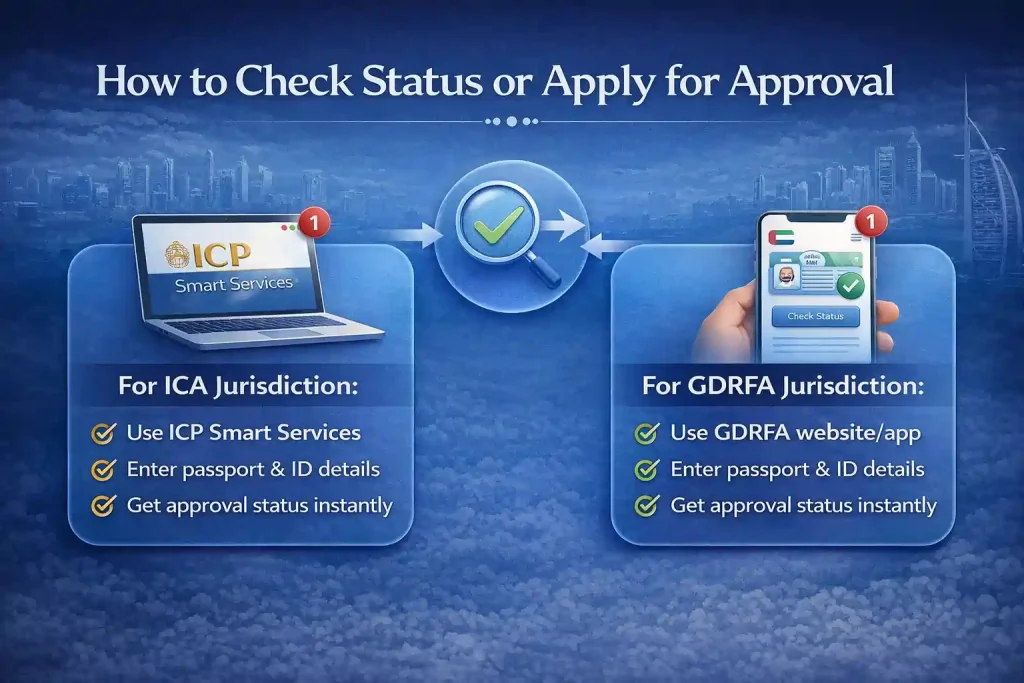
For ICA jurisdiction:
Open the ICP Smart Services website or download the ICP Smart Services app. Look for the service labeled “Residents’ Approval to Return.” Enter the passport number, passport expiry date, nationality, and Emirates ID number if available. The system processes the request and displays the result.
If the result says “No approval required,” that is the end of it. Save a screenshot for peace of mind.
If the result says “Approval required,” the system walks through the application. Any fines attached to the file appear during this step. Paying them happens through the same portal using a credit card. Once payment clears, approval is usually instant. A confirmation number appears. Save that number.
For GDRFA jurisdiction:
Dubai residents use the GDRFA website or the Dubai Now app. The service is called “Approval to Return” or something similar, depending on the platform. Enter the same details:
- Passport number,
- Emirates
- ID
- visa information
The system shows whether approval is needed or if everything is clear.
If approval is required, the application process mirrors ICA. Fines appear, payment happens online, and a confirmation number is generated.
What the Approval Confirmation Looks Like
When approval comes through, the system displays a confirmation page. It includes:
- The traveler’s name
- Passport number
- Emirates ID number
- A confirmation or transaction number
- The date of approval
Some travelers get an email confirmation. Others only see the on-screen result. Either way, saving a screenshot or taking a clear photo with a phone is enough. Airlines rarely need more than the confirmation number.
Traveling When No Approval Is Required
For most travelers, the answer is simple. A valid residency visa, a passport with sufficient validity, and an absence of under six months mean nothing else is needed.
But some airlines still ask for ICA approval. This happens because their check-in systems have not been fully updated or because they follow stricter procedures for certain routes.
When this happens, showing the result from the ICA or GDRFA portal, the one that says no approval is required usually satisfies the request.
Having that screenshot on a phone or printed out saves time at the check-in counter. It is a small step that prevents last-minute stress.
New Visa Holders and First-Time Entry
People who received their residency visa while overseas face a slightly different situation. The visa may be valid on paper, but the immigration system may not have fully processed it.
ICA approval in this case acts as confirmation that the visa is active and ready for entry. The application process is the same as for other cases. Once approval comes through, the traveler can board without issues.
This applies to employment visas, family sponsorship visas, and student visas. Anyone in this situation should run a status check before booking flights.
Tourists and Visit Visa Holders
Tourists do not need ICA approval. The system was designed for residency matters, not for visitors.
But problems can arise. If a tourist overstays a visit visa, fines start accumulating. The overstayer must be cleared before leaving the UAE. In some cases, clearance becomes necessary before returning on a future trip. The ICA portal handles these requests as well.
What Delays or Rejections Look Like
Not every application goes through smoothly. Sometimes approval takes longer than expected. Sometimes it gets rejected.
Delays happen when the application goes into manual review. This can take one to three working days.
The system does not always explain why. Common reasons include system flags on certain nationalities, incomplete information, or technical issues. Waiting a few days and checking again is the usual approach.
Rejections happen when something is wrong with the file. Unpaid fines are the most common cause. Expired visas come next. Incorrect information entered during the application also triggers rejections.
When rejection occurs, the system sometimes shows the reason. Other times, it just says “rejected.” In those cases, visiting an immigration office or contacting ICA directly becomes necessary.
How Far in Advance to Handle This
Checking status or applying for approval should happen at least a week before travel. That leaves time to deal with fines, manual reviews, or unexpected issues.
Applying the night before a flight is risky. If something goes wrong, there is no time to fix it. If manual review is required, the approval may not come through before departure. A little buffer time turns a potential crisis into a routine task.
Common Questions Travelers Ask
Is there a fee for ICA approval?
Checking status is free. If approval is required and fines exist, those fines must be paid. No separate approval fee applies in most cases.
How long does approval stay valid?
Approval is valid for 30 days from the date of issuance. Travel must happen within that window.
Can someone else apply on behalf of a traveler?
Yes. Travel agents do this daily. Family members can also submit applications as long as they have the passport and visa details.
What if the website shows an error?
Website errors happen during peak hours or maintenance. Trying again later or using the mobile app usually resolves it.
Does a Dubai resident ever use ICA?
No. Dubai residents use GDRFA exclusively. ICA handles all other emirates.
What to Do Before Heading to the Airport
A few simple steps before leaving for the airport make the process smooth.
Run a status check a week before travel. If approval is needed, apply immediately. Save screenshots of the result, whether approved or showing no approval needed. Keep your passport and Emirates ID accessible. If fines were paid, save the payment confirmation as well.
At the airport, if airline staff ask for ICA approval, show the screenshot or confirmation number. If they ask why no approval is needed, explain that the visa is valid, the absence is under six months, and no fines exist. Most check-in agents know the new rules. For those who do not, showing the portal result usually settles it.
Why This Still Matters
The rule change simplified travel for millions of residents. But the exceptions still catch people off guard. Long absences, expired visas, and unpaid fines do not go away just because the general requirement was lifted.
Knowing where the file stands before booking tickets saves money, time, and stress. A five-minute check on the ICA or GDRFA portal answers the question:
Does this traveler need approval or not? From there, the path is clear. Either nothing is needed, or the approval process takes a few minutes to complete.
Immigration rules and procedures may change without notice. This guide reflects standard practices as of the current year. Travelers should verify their specific situation with official sources or their airline before departure.
For those planning international travel after returning, understanding Japan visa requirements for UAE residents ensures a smooth next journey.
Conclusion
For most residents, ICA approval is not needed. A valid visa, a clean record, and an absence under six months mean the return is straightforward. For those in exception categories, the solution takes minutes online. Check status. Pay any fines. Approval follows quickly.
Run the check a week before travel. Keep a screenshot. Travel with confidence. mSafe travels and smooth returns.